
Before Winter Arrives: 7 Home Problems You Should Fix in Tricity
Winter in Chandigarh, Mohali, Panchkula, and Zirakpur brings cold mornings, fog, and lower temperatures. But it can also make existing home problems more noticeable.
Have you noticed damp patches after the monsoon? Cold air entering through window gaps? Or a geyser socket getting unusually warm?
These small problems are worth checking during home maintenance before winter. You don’t always need expensive repairs. Sometimes, finding the actual cause and fixing it early is enough.
Here are seven common home problems to check before winter.
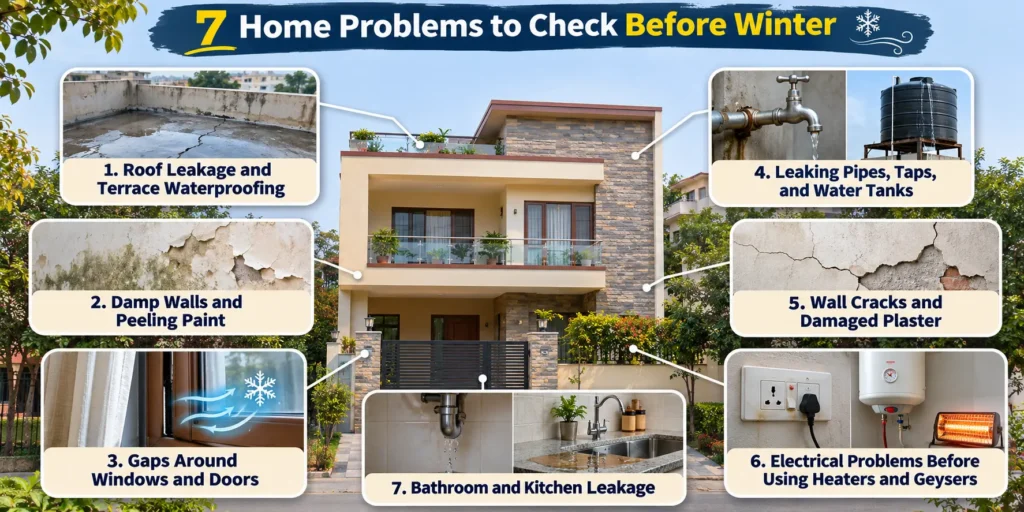
1. Roof Leakage and Terrace Waterproofing
After the monsoon, some homes develop water stains on ceilings or damp patches near terrace walls. These may indicate damaged waterproofing, cracks, or blocked drainage outlets.
What should you check?
- Cracks on the terrace floor and parapet walls.
- Blocked rainwater outlets.
- Damaged waterproofing around pipe openings.
- Water stains on top-floor ceilings.
Practical advice: Before paying for complete terrace waterproofing, get the drainage outlets, joints, and damaged areas inspected.
A small, localised roof leakage repair may solve the problem. However, widespread waterproofing damage might require more extensive treatment.
Don’t repaint a water-damaged ceiling until the leakage is fixed and the surface has dried.
2. Damp Walls and Peeling Paint
Many homeowners notice damp patches, bubbling paint, or a musty smell in bedrooms and bathrooms.
But not every damp wall needs waterproofing.
There are different possible causes:
- Condensation: Moist indoor air collects on cold wall surfaces.
- Seepage: Water enters through damaged exterior walls or joints.
- Plumbing leakage: Water escapes from concealed pipes or bathroom fittings.
How can you identify the problem?
If moisture appears mainly on cold mornings and reduces after ventilation, condensation could be responsible.
If the patch remains wet, grows after rain, or appears near plumbing, further inspection is needed.
Money-saving tip: Don’t spend money on wall putty and fresh paint before identifying the moisture source. The stains may return.
3. Gaps Around Windows and Doors
Cold air entering through bedroom windows or balcony doors can make winter mornings uncomfortable.
Before replacing an entire window, inspect these areas:
- Damaged rubber seals.
- Gaps between frames and walls.
- Loose door hinges.
- Broken window locks.
- Damaged sliding tracks.
Simple home check: On a windy day, place your hand near closed window edges to feel for incoming air. You can also look for visible gaps in daylight.
Replacing damaged seals or adjusting a loose frame may be sufficient.
However, badly damaged or misaligned frames may need professional repair.
4. Leaking Pipes, Taps, and Water Tanks
A dripping tap may seem harmless, but continuous leakage wastes water and can damage nearby walls.
As part of your winter home preparation, inspect your bathroom, kitchen, and overhead water tank connections.
Look for:
- Leaking taps and flush tanks.
- Wet patches below sinks.
- Loose pipe joints.
- Slow-draining outlets.
- Water stains near overhead tank connections.
Useful tip: If the wall near your bathroom stays damp even without rainfall, check nearby plumbing before assuming the exterior wall needs waterproofing.
Fixing a damaged fitting may be simpler than repairing the entire wall.
For concealed leaks, arrange a plumber’s inspection rather than breaking tiles without identifying the source.
5. Wall Cracks and Damaged Plaster
Have you noticed cracks around doors, windows, or exterior walls?
Some cracks develop due to plaster shrinkage or temperature changes. Others may indicate movement or structural problems.
| Crack condition | Recommended action |
|---|---|
| Small surface crack in plaster | Inspect and repair if non-structural |
| Crack returning after repair | Investigate the underlying cause |
| Crack getting wider | Arrange professional inspection |
| Crack near a beam or column | Seek structural assessment |
Important: Don’t cover widening or suspicious cracks with cement or putty just to improve their appearance.
If a crack is growing, accompanied by sticking doors, or affecting structural elements, have it assessed by a qualified professional.
6. Electrical Problems Before Using Heaters and Geysers
During Tricity winters, room heaters and geysers become part of daily life.
But damaged wiring, loose sockets, and overloaded circuits can create serious safety risks.
Warning signs include:
- Burning smells near switches.
- Unusually hot sockets.
- Buzzing sounds from fittings.
- Frequent circuit breaker trips.
- Damaged or exposed wires.
Safety tip: Don’t connect room heaters to extension boards or power strips. Use a suitable wall socket, and avoid overloading electrical circuits.
If you notice burning smells or overheating, stop using the affected connection and contact a qualified electrician.
Electrical repairs are not suitable DIY work.
7. Bathroom and Kitchen Leakage
Bathrooms and kitchens experience regular water use, making them common areas for moisture problems.
Check for:
- Cracked tiles and damaged grout.
- Missing silicone around sinks.
- Leaking flush tanks.
- Loose shower fittings.
- Blocked floor drains.
Practical advice: If water is escaping through damaged sealant around a sink, replacing the sealant may help.
However, water appearing on the opposite side of a bathroom wall may indicate plumbing or waterproofing problems.
Find the source before replacing tiles or undertaking major repairs.
Winter Home Maintenance Checklist
Not every problem requires immediate major repair. Use this home maintenance before winter checklist to decide what needs attention first.
| Problem | First action | Priority |
|---|---|---|
| Burning socket or exposed wiring | Stop using it; call an electrician | Urgent |
| Widening wall crack | Arrange expert inspection | High |
| Active roof or pipe leakage | Locate and stop the leak safely | High |
| Damp wall patches | Identify the moisture source | Medium |
| Blocked terrace drain | Arrange safe cleaning | Medium |
| Window gaps | Inspect seals and fittings | Routine |
| Damaged sink sealant | Repair if appropriate | Routine |
What Can You Check Yourself?
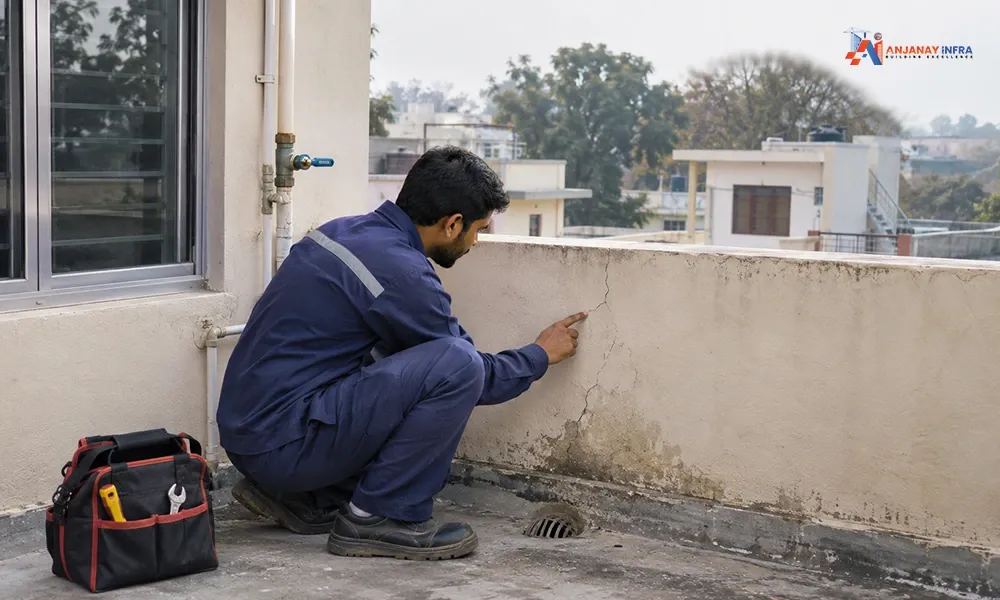
You can visually inspect window gaps, damp patches, dripping taps, and accessible drainage points.
However, electrical faults, structural cracks, concealed plumbing leaks, and extensive waterproofing problems require professional attention.
Whether you’re planning house maintenance in Chandigarh or checking your property in Mohali, Panchkula, or Zirakpur, start with the problems that could affect safety or cause further damage.
Remember: Repair the cause first, not just the visible damage.
Frequently Asked Questions
When should I prepare my home for winter in Tricity?
October and November are good months to inspect your property, particularly after the monsoon season.
Why do my bedroom walls become damp during winter?
Condensation, poor ventilation, plumbing leaks, or external seepage may be responsible. Identify the cause before starting repairs.
Should I waterproof my entire terrace if I notice one leak?
Not necessarily. First identify the leakage source. Localised repairs may work, but extensive waterproofing damage may require broader treatment.
Can small wall cracks be repaired with putty?
Minor, non-structural surface cracks may need simple repairs. Widening or recurring cracks require further inspection.
Which winter home repairs should I prioritise?
Start with electrical hazards, active leaks, and concerning structural cracks. Address smaller maintenance issues according to their severity.
 Get an expert-reviewed estimate tailored to your project, location, and budget. Share your details for an accurate construction or renovation cost.