
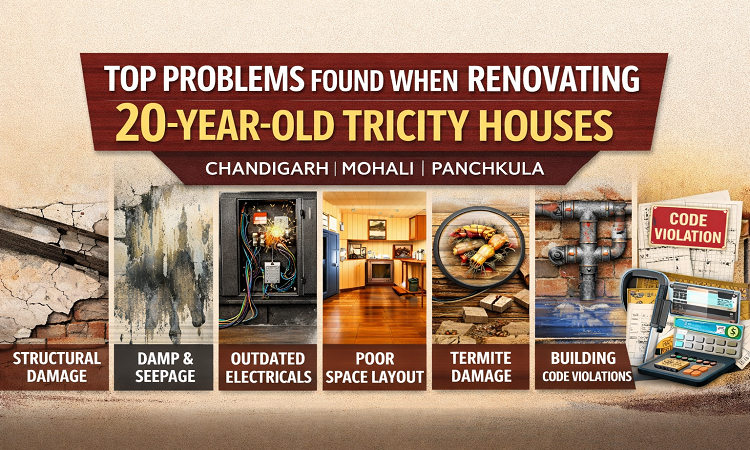
Top Problems in Renovating 20-Year-Old Houses in Tricity
The homes built somewhere between 20 to 25 years ago in cities such as Chandigarh, Mohali, and Panchkula were thought to be very modern and well-designed in their time. Many homes were built with good intentions, but time, changing lifestyles, and changing methods in home design and development have revealed many hidden challenges. Renovating such homes is rarely as easy as it sounds.
Thus, if one is planning to renovate a home built 20 years ago and situated in the Tricity region (Chandigarh, Mohali, and Panchkula), they should be aware of these problems to avoid budget and design issues.
Structural Wear and Foundation Stress
Gradual structural fatigue is one of the most critical issues that are part of older Tricity homes. Decades of settlement, construction activities in the neighborhood, and seepage of water weaken the foundation and load-bearing elements. While hairline cracks may appear harmless, deeper cracks in beams or columns, or walls, are usually indicative of deeper-seated underlying stress.
Many homeowners discover during renovation that their property requires old house structural repairs before any design work can begin. Ignoring these signs may ultimately develop safety concerns, especially when you start adding new flooring, heavier fixtures, or an additional storey to the property.
Dampness, Seepage, and Hidden Water Damage
In houses that were constructed two decades ago, moisture-related issues are extremely common. This is because the earlier materials used for waterproofing were not expected to last this long.
Bathrooms, kitchens, balconies, and even basements are some of the facilities most affected. In some cases, internal walls and slabs are weakened due to concealed damage, and they often become visible once renovations are undertaken and tile removal begins.
Outdated Electrical Systems
The wiring of older homes had been planned for minimal usage of electrical appliances. Modern homes require air conditioners, geysers, induction cooker tops, office facilities, and many more, which older wiring systems are not designed to handle safely.
Renovation work often brings to light brittle wires, overloaded circuits, absent earthing, and unsafe switchboards. In such situations, changing the entire electrical system becomes inevitable, thereby adding cost and time to the renovation work.
Plumbing Lines Past Their Lifespan
Similarly, galvanized iron and old PVC pipes used in old houses corrode, clog, and develop cracks. Complaints abound about rusty water, lower pressure, and leakages.
Once renovation commences, it is very hard to replace part of the plumbing system, and most homeowners in the Tricity area are left with no option but to replace the entire water supply and drainage system to avert any problems that might arise once renovation is through.
Space Planning That No Longer Fits Modern Living
Houses designed 20 years ago often reflect outdated lifestyles, such as small kitchens, boxed-in rooms, limited storage, and little natural light. This frequently means knocking down walls to create open layouts, expanding the kitchen, or adding a wardrobe and utility room.
However, layout changes can be tricky in older homes, as many of the internal walls are load-bearing and removing them without any proper assessment may compromise the structure. This is where experienced home renovation experts play a vital role in balancing design goals with structural safety.
Flooring and Subfloor Issues
Older mosaic, marble, and ceramic tiles may look intact, but often conceal uneven subfloors and weakened screeds. When changing the flooring, contractors often find hollow areas, damp damage, and/or cracked base slabs.
The new types of flooring may crack or start separating after a few years unless these underlying problems are addressed.
Non-Compliance With Current Building Codes
Regulations on building have changed profoundly in the last two decades. In old structures, there is no provision for fire safety, ventilation, staircase height, or rainwater drainage systems.
Renovating a house and ensuring that it aligns with contemporary regulations helps not only in legal terms but also in creating a safer living environment while maintaining the property’s long-term value.
Termite and Pest Damage
Termites or borers can affect the wooden door frames and cabinets, and even the ceilings of older homes. The damage usually remains hidden under paint or polish and is often seen after the dismantling work has started.
Notably, addressing pest damage involves replacing, chemically treating, and preventing it beforehand, and all these are to be factored into renovation planning.
Budget Escalation Due to Unknowns
It seems that the most frustrating aspect of renovating an old house is the tendency for costs to rise as a result of unexpected escalations. What started as a simple renovation plan can suddenly balloon as unforeseen problems arise behind the walls, beneath the floors, and inside the ceilings.
Choosing a home renovation contractor near me without checking their experience in older properties may cause homeowners to experience long delays and higher home prices due to poor initial planning before home renovations.
Coordination Challenges During Renovation
Renovation of the old house in Tricity requires a proper synchronization between structural engineers, designers, plumbers, electricians, and civil teams. Every step in renovation, unlike new construction, depends upon what one finds on the site.
Improper planning could lead to reworks, material wastage, and longer timelines, especially in cases where there are residents staying in the house during renovation.
Final Words
Renovating a 20-year-old house in Tricity is not just about aesthetics, and such a renovation is a technical process that needs thorough evaluation, realistic estimation, and excellent technical expertise.
When planned carefully, a renovation project can transform an aging house into a safe, functional, and future-ready home. Good renovation depends on thinking ahead of potential problems and working with experts who understand the special problems associated with old homes in Tricity.
Frequently Asked Questions (FAQs)
Is it safe to renovate a 20-year-old house without structural inspection?
No. Older homes in Tricity often have foundation settlement, hidden cracks, or beam stress. A structural audit is essential before making layout changes or adding load.
What is the most expensive hidden issue in old house renovation?
Structural repairs and full plumbing or electrical replacements usually cause the biggest budget escalations once demolition begins.
Should I replace plumbing and wiring even if they seem fine?
Yes. Most 20-year-old systems were not designed for modern appliance loads and often fail soon after renovation if not replaced.
Can I remove internal walls in an old Tricity house?
Not without expert evaluation. Many older homes use load-bearing walls internally, and removing them without engineering checks can compromise safety.
How long does renovation of a 20-year-old house usually take?
Depending on scope and hidden repairs, most Tricity home renovations take between 3 to 6 months.
Why do renovation costs increase after work begins?
Because issues like dampness, termite damage, uneven flooring, and outdated services become visible only after dismantling starts.
 Get an expert-reviewed estimate tailored to your project, location, and budget. Share your details for an accurate construction or renovation cost.